Beyond Google: Optimising Your Visibility for AI-Overviews and Alternative Search Platforms
The search game has been re-platformed. Not disrupted. Re-platformed.
Google still matters—but it no longer owns the moment of truth. Answers are now assembled, summarised, and served by machines that don’t care about your ranking position, your DA score, or how pretty your meta description is. They care about whether your content resolves intent. AI-Overviews, conversational engines, and social search platforms have changed the operating model. If your visibility strategy still assumes users will click ten blue links and patiently compare options, you’re running last decade’s playbook in this quarter’s market.
This isn’t about abandoning SEO. It’s about upgrading it.
The Real Shift: From Rankings to Representation
Classic SEO optimised for placement. AI search optimises for selection.
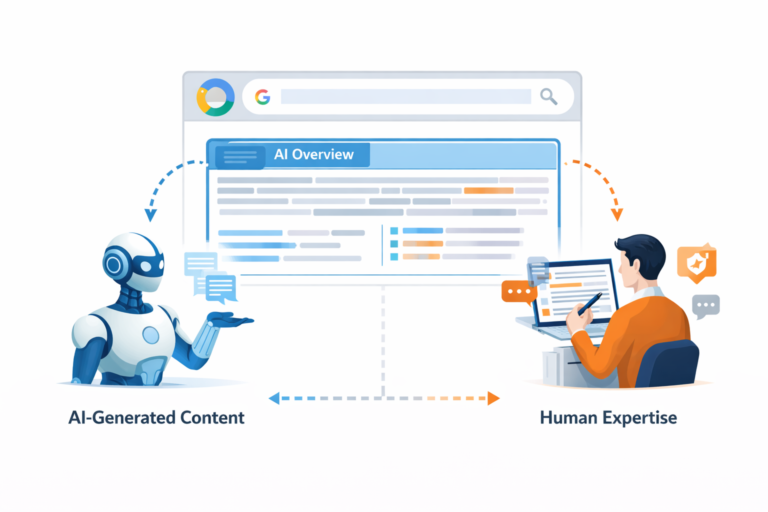
In an AI-overview environment, the engine doesn’t send users to you—it speaks on your behalf. Your content becomes training data, citation material, and answer scaffolding. If the model trusts you, you get represented. If it doesn’t, you disappear—regardless of how well you rank.
That changes the KPI stack entirely. Visibility is no longer a traffic problem. It’s a representation problem. And representation is earned through structure, clarity, and authority—not volume.
How AI-Overviews Actually Decide What to Surface
Let’s de-romanticise the tech for a second. AI-Overviews are not browsing the web like a human. They are synthesising from sources that are explicit, structured, repetitive in consensus, cleanly attributed, and semantically unambiguous.
They favour content that can be lifted, compressed, and re-expressed without distortion. Long-winded opinion pieces, fluffy thought leadership, and “SEO-optimised” filler collapse under this model. What survives is content that answers questions like a reference manual, not a blog.
That’s why visibility is drifting away from traditional brand blogs and toward explainers, frameworks, definitions, and tightly scoped insights.
Why Google Isn’t the Only Arena Anymore
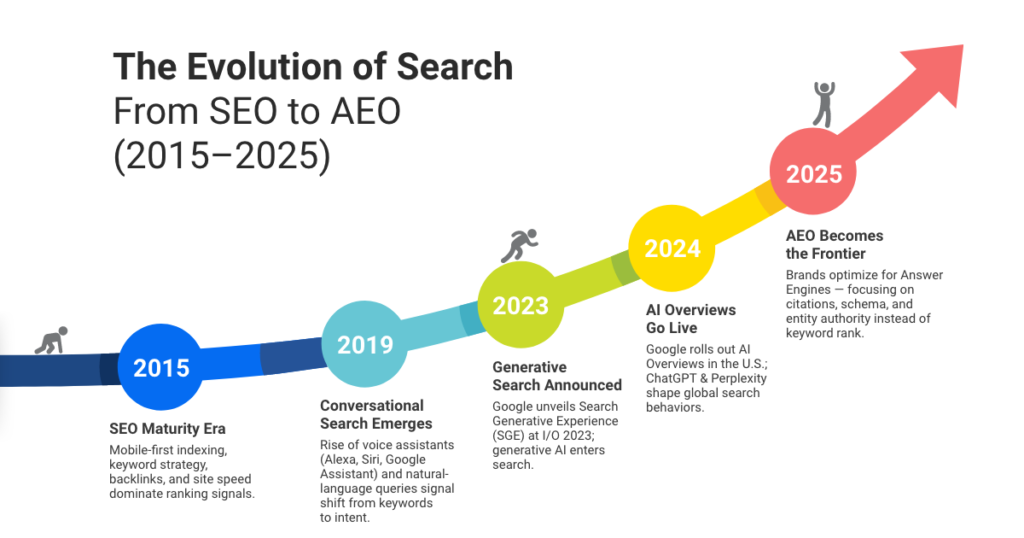
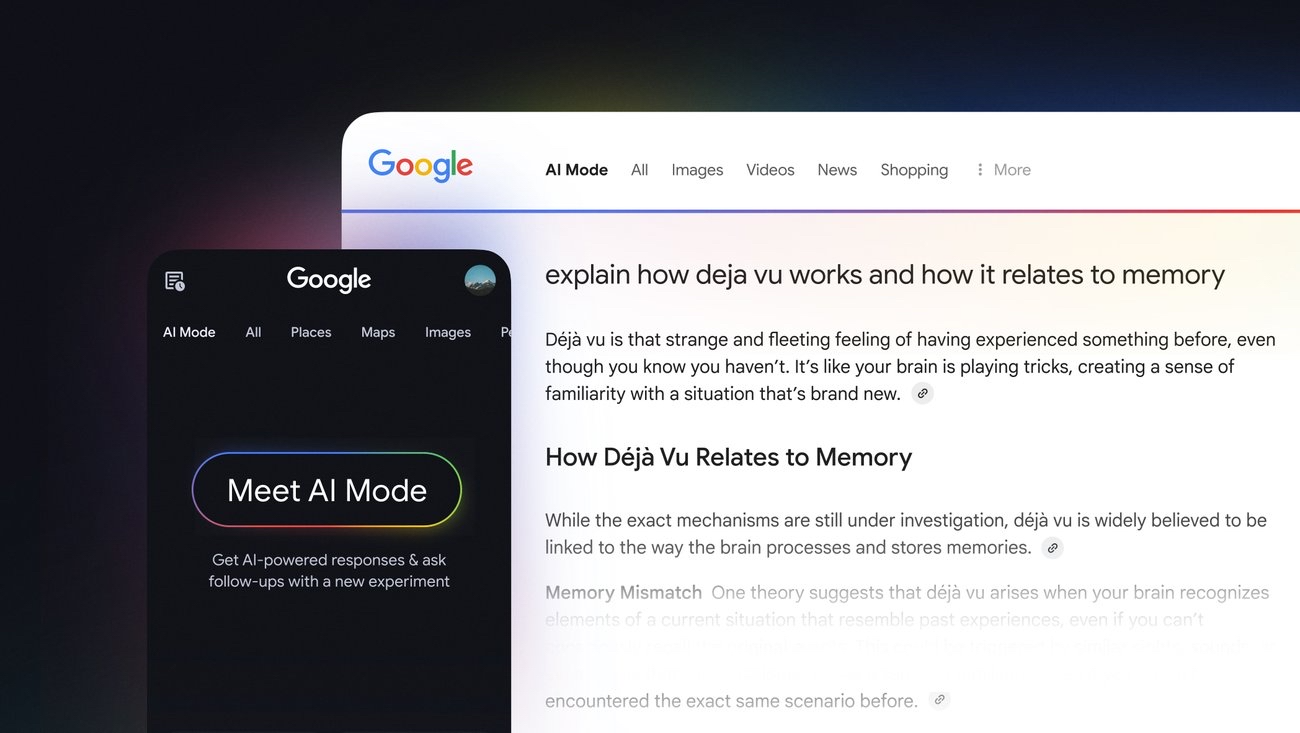
Even within Google, AI-Overviews are competing with Google’s own results. But outside Google, the fragmentation accelerates.
Users now ask questions directly inside platforms like ChatGPT, Perplexity AI, and TikTok—each with radically different retrieval logic.
Google rewards relevance and authority signals. AI answer engines reward clarity and citation-worthiness. Social platforms reward pattern recognition and behavioural momentum. One strategy does not cover all three.
Optimising for AI-Overviews: The Non-Negotiables
This is where most teams get it wrong. They treat AI visibility as “SEO plus prompts.” That’s tactical cosplay.
The real optimisation layer is structural. AI systems prefer content that behaves like data. That means clear headings that define scope, declarative sentences that state facts, not vibes, consistent terminology with no creative synonyms, explicit cause-and-effect explanations, and neutral tone over persuasive tone.
If your content sounds like marketing, it gets ignored. If it sounds like documentation, it gets quoted. High-performance teams now design pages to be excerptable. Each section must stand alone, make sense in isolation, and survive being lifted into a 40-word answer box without context. That’s not copywriting. That’s systems design.
The Rise of Alternative Search Platforms (And Why They Matter)
Let’s talk about intent drift.
When users go to Google, they’re often exploring. When they go to AI engines, they’re deciding. When they search on social platforms, they’re validating.
Each stage pulls from different content ecosystems. Bing feeds into AI systems differently than Google. Social search prioritises recency, demonstration, and peer signals over traditional authority. AI engines prioritise explainability over engagement. If your brand only exists as a website, you are under-indexed across these ecosystems. Visibility now means distribution of understanding, not just distribution of links.
Why “Topical Authority” Isn’t Enough Anymore
Topical authority used to mean covering everything in a niche. Now it means resolving ambiguity.
AI systems don’t reward you for writing ten articles on the same keyword. They reward you for eliminating confusion. The brand that wins is the one that defines terms clearly, explains trade-offs honestly, and uses consistent frameworks across all content.
This is why high-performing teams are shifting from keyword clusters to knowledge architectures. Instead of chasing search volume, they map how ideas relate: what causes what, what depends on what, what breaks when X changes, and what’s outdated, and why. That’s the layer AI engines trust—because it mirrors how reasoning works.
Social Search Is Eating the Middle of the Funnel
Platforms like TikTok aren’t just discovery engines anymore. They’re comparison engines. People don’t search “best CRM software.” They search “CRM that doesn’t suck for small teams” and watch five lived experiences in 90 seconds. That means your visibility strategy must include demonstrative clarity.
If your message can’t survive being paraphrased by creators or summarised visually, it won’t travel. Text alone doesn’t scale across platforms. Concepts do.
Measurement Is the Silent Failure Point
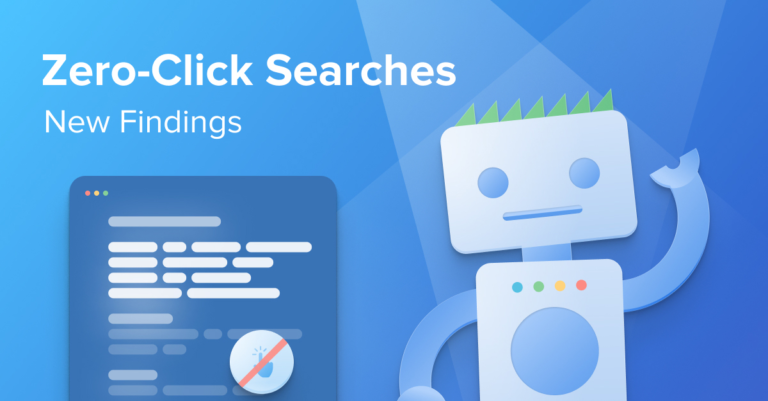
Most analytics stacks are blind to AI-driven visibility. If your dashboard only tracks clicks and sessions, you’re missing the signal. AI-Overviews often replace the click. Your brand may be influencing decisions without ever receiving traffic.
High-maturity teams are now tracking brand mentions inside AI responses, citation frequency across answer engines, consistency of message reproduction, and search demand lift without proportional traffic lift. That’s uncomfortable for traditional marketers—but it reflects reality. Visibility without attribution is still visibility. The question is whether you’re shaping it or leaving it to competitors.
The Strategic Takeaway
Search has stopped being a channel. It’s now an interface layer between human intent and machine interpretation.
Winning brands don’t optimise pages anymore. They optimise explanations.
They build content that machines can trust, compress, and redeploy without misrepresenting the brand. This requires discipline. Fewer opinions. More clarity. Less persuasion. More precision. The upside is asymmetric. Once an AI engine trusts your explanation of a topic, it keeps using it—quietly, repeatedly, at scale.
That’s not traffic. That’s leverage. And leverage compounds long after rankings fluctuate.